
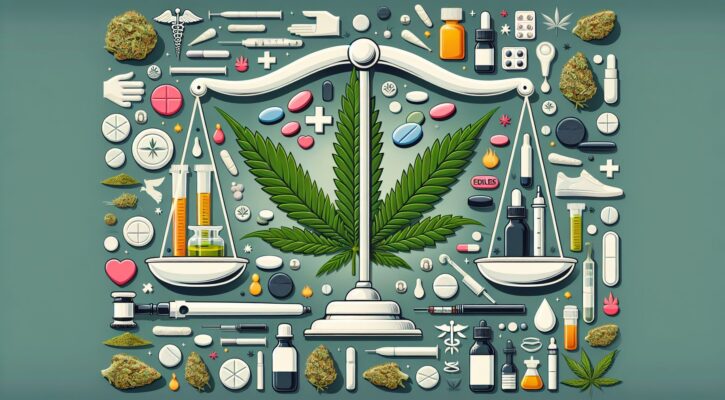
How Marijuana is Changing Alternative Medicine
July 28, 2024
More than ever, society begins to embrace the diverse properties of cannabis, shifting from historical notions of an illicit drug toward developing an extensive understanding of its medicinal potential. From extensive literature reviews to carefully controlled clinical trials, research data uncontestably demonstrates the therapeutic potential of marijuana. Over the years, with its demonstrated efficacy in correcting imbalances, bolstering tissue health, and relieving symptom burdens, marijuana is shaking the foundations of alternative medicine as know them. This blog post will delve into (everything you) need to know about marijuana being used in conjunction with alternative validated medical therapies to improve health and wellness outcomes.
Blurring the Grounds: Cannabinoids and Alternative Therapies
Before exploring how marijuana is leading to revolutionary strides in alternative medicine. It’s essential to draw the blend between pharmacology and botanical principles. Marijuana plants contain over a hundred compounds known as cannabinoids.[^1^] Among these are the well-known THC (tetrahydrocannabinol) and CBD (Cannabidiol) utilized for their hailing benefits and instrumental role in managing health ailments.
With extensive testing and increasing research, the complex interaction between cannabinoids and the body’s internal endocannabinoid system (ECS) is starting to unfold. [^2^] The ECS plays a momentous role in regulating critical physiological processes like sleep, appetite, mood henceforth. Conversely, an unregulated ECS may predispose individuals to diseases and syndromes that wouldn’t come up only through genetic factors. The promising findings indicate a role for ECS in painting a brighter picture of an integrative and holistic breaks of a battery of concerns such as chronic pain, inflammation, mood concerns, immune resilience, and cognitive well-being.
The Backbones: How Marijuana Holds Value in Alternative Medicine
The real behind-the-scenes action of marijuana occurs through its interplay with the body’s native ECS. Promising survey-based researches and clinical efficacy evaluations conclude marijuana helping in conditions like epileptic seizures, Alzheimer’s disease, cancers, PTSD, multiple sclerosis, etc. One might inquire after how marijuana plays an inherent module in orchestrating these patho-mechanisms underlying variable body systems and how it harnesses it into efficacious outcomes. Simply put, the wide chemotype of cannabinoids work in conjecture with marijuana-stimulating the ECS synergistically overturns patho-ways, eliminates barrier chades, capitalized on body’s wisdom, and stimulation of nerve impulse across diverse body systems for an integrative wellness path.
Leveraging The Forepassed Hindrances to Revolutionary Treatments
Due to louder clamors, clinical rigor, and societal acceptance, better modes of treatments come to a spotlight that uses herbal therapies like marijuana. An example driving home this change can be seen in the introduction of drugs, Epidiolex and Sativex. Labelled as safe and effective by FDA, Epidiolex seems to educe remarkable relief for sufferers of two rare and severe forms of epilepsy, Dravet and Lennox-Gastaut syndromes.[^3^] Similarly, Sativex also labeled as safe offers great respite to sufferers of spasticity associated with multiple sclerosis, and some countries utilize it for chronic cancer pain.[^4^]
Actuating Future Orienteerings of Alternative Medicine
Marijuana, with its primitive medicine roots in historical texts of ancient civilizations, is paving new facets in perspectives of alternative medicine in today’s age. Yet, between the perquisites and caveats, it’s of utmost importance you avail the honorary services professionals can offer to derive maximum benefits and adequately support your health and wellness goals. Enjoy an individualistic, informative, and safe stance. Educate yourself before making a discourse decision, determine whether it’s suitable for your lifestyle and strategize with professionals to reach informed scientific literature of paced trends enhanced leisurely with individual quality lives and societal dimensions.
References
[^1^]: Dariš B., Tancer Verboten M., Knez Ž., Ferk P. Cannabinoids in cancer treatment: Therapeutic potential and legislation. Bosn. J. Basic Med. Sci. 2019 Feb;19(1):14–23.
[^2^]: Gonca E., Darıcı F. The Effect of Cannabidiol (CBD) on Low-Frequency Activity and Functional Connectivity in the Brain of Adults with and without Autism Spectrum Disorder (ASD). J. Psychopharmacol. Oxf. Engl. 2019 Aug;33(9):1141–1148.
[^3^]:Timothy Welty B, Luebke A, Gidal BE. Cannabidiol: Promise and Pitfalls. Epilepsy Curr. (2014)14(5):250–252.
[^4^]: Russo EB. Multiple Sclerosis, Cannabinoids, and Cognition. J Neuropsychiatry Clin, 2021 Neurosci. 33.