
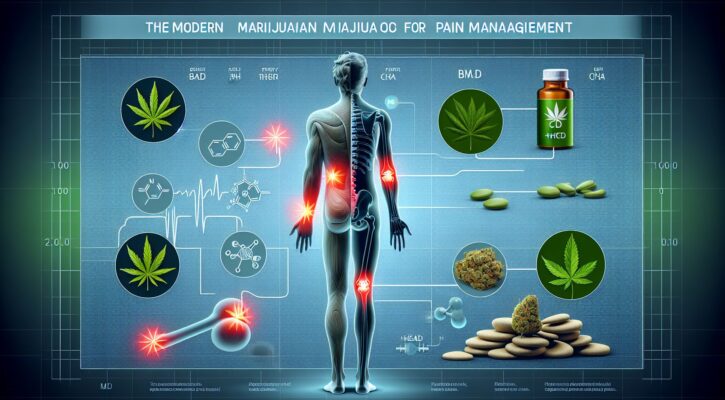
Using Marijuana for Pain Management: A Modern Approach to Old Agony
August 5, 2024
If one were to look critically at the world of medicine in recent years, one would no doubt be intrigued at the numerous unconventional drugs that are gradually receiving the acknowledgment of healthcare professionals globally. At the center of this shift lies marijuana ― a plant once only associated with leisure and addiction, now repurposed and revered for unprecedented medicinal applications. Staggering evidence suggests that these advantages effectively extend to the field of pain management. This post explores the background and scientific substantiation supporting the use of marijuana for this end, emphasizing how such an unconventional approach could be the key to controlling persistent and debilitating pain.
Discovery: Marijuana’s Medicinal Potential
Lost amidst decades of stigma surrounding marijuana is the plant’s impressive history as a form of traditional medicine, its clinical potential rediscovered fairly recently. Many of the thousands of studies undertaken, primarily to understand disorders related to substance abuse, seamlessly revealed unquestionable therapeutic attributes. Take, for instance, a specific review where 76 percent out of nearly 79 medical studies confirmed significant medical benefits relating to marijuana’s incorporation (McKenna G. et al., 2016).
What Pain Is… Or Isn’t
En route to understanding how marijuana soothes pain, one has to first tackle understanding the nature of pain itself. Pain is not a disease in itself. Think of it as an unpleasant bodyguard keeping tabs on your system’s wellbeing. Its job: Rally up attention on areas warranting immediate medical address, thereby serving a protective and functional role. Alas, this is not the best human programmed system. Sometimes, (too many times, unfortunately), guard dogs become rabid.
Pain morphs, no longer serving a beneficial role, rather becoming a clinical problem of its own, pushing way past the original cue calling for healing. In other words, when the injury heals, but the pain persists, lying suspended for 3 or even 6 months without subsiding, we would be staring persisting or chronic pain, straight in its ugly face.
Here Comes The Hero: Marijuana To The Rescue
Science continues to invest in adquate nutritional, medicinal, psychotherapeutic, anesthetic compounds present in selected traditional plant drugs like marijuana (Cannabis sativa) to manage such pain stemming from distinct medical conditions. These could range broadly from cancer, HIV infection, multiple sclerosis to fibromyalgia, irritable bowel syndrome, and certain persistent conditions comprising migraines (National Academies of Sciences, PNAS, 2017).
Marijuana And Pain: The Science
The botanical properties of marijuana consist of hundreds of psychoactive chemicals. However, among these exist two cannabinoids creating attention: THC (Delta-9-tetrahydrocannabinol) and CBD (Cannabidiol).
THC, the more well-known amongst its peers, delights recreational users graciously. A ‘high’ morale braced by fits of giggles and permeating tranquillity when moderately ingested, on the flip creates favorable conditions for potential addiction while amplifying GX symptoms in heavily intake scenarios.
Next up is CBD. With relatively vastly safer projections, this could show promise in treating nausea stemming from cancer procedures, neuropathic pain, and multiple sclerosis spasms (National Academies of Sciences PNAS, 2017).
The Influence Of Medical Marijuana
In an animal-based study (Kwilasz A. et al., 2018) investigators observed, the ability of THC to weaken pain responsiveness primarily impacts brain areas handling emotional reaction to pain than the areas processing pain itself.
Synchronism of THC and CBD potentially boosts our innate cannabinoids being released subsequently simplifying functional adjustability of pain response (Management of Cancer Pain Summary, PDQ®, 2018).
Human research studies also confirmed these advantageous implications. A vignette that reviewed complex clinical trials on cannabinoids quoted “Cannabinoid analgesics have generally been well tolerated in clinical trials … with ‘acceptable’ side effects”… especially in chronic neuropathic pain sufferers with progressive conditions like multiple sclerosis and cancer (Johnson J. et al., 2013).
Reframing The Picture – Medical Marijuana in Prescription Opioid Landscape
Neuropharmacologists compare the effect of opting for marijuana in lieu of predominant prescription opioid painkillers in the mitigation of debilitating pain. Opioids, although managing temporary alleviation from chronic prodigious pain eventually follow through with heaps of life-altering problems ranging from over-dependency (addiction), stomach problems to fatal heart conditions.
Compared to the yawning chasm of psychoactive risks lurked by opioids, adopting marijuana sets a more balanced pharmacological backdrop disproportionately tilting safety overtures above conventionally diminished hazard margins ranging from potential addiction attributes to minute lethal black turns. Also, provided that a patient follows guidelines explicitly curbing on abusive inclinations capable surfacing with disproportionate intake (Abrams D. I., 2018).
A Sweet Tip
That zero-deaths certificate owed to marijuana overdose still escorts the historical claims dating back five millennia (The National Academies PNAS report, 2017).
Looking Forward
Let’s acknowledge that primping the profile of marijuana has been less than immaculate. Its public reputation-especially in reference to addiction, mental health concerns, and undermined academic performance- raises waves of hesitations towards the outright state-level feasibilities permitting access both recreationally and medically. Diffused state-to-state laws veined with contradictory Federal regime expectations further throw in entrumbles fubbbing the smooth progressive rollout of marijuana, particularly for assuaging persistent pain.
Sign to Pack Off – Conclusion
However, daunting these trajectory criticisms may appear, marijuana bucks dramatic improvements pointing scientific harmony in pain management dialogue. The final word is yet to penetrate beyond deaf walls, cross lurking scepticism speckled lanes preempting the clinical gateway elongating the therapeutic hand. Sprucing innovative pharmaceutical applications assured in its rootmaps notably eases away forever locked struggle housing pain.
What we are forced to task back asks for thorough, even-handed, fact-heavy contemplations rummaging the valuable middle ground echoing moderate incorporations placardless of benefits inclusions under tightly rested safety best practices dwelled on individual experiences, however haunting they seem at potential pitfalls-poised unparalleled solutions makeup for poorly chained lifelines under opioid-offended backdrops.
Bracing themselves, millions, zero happiness reflecting besides stockpiling hope mikans for future genuine therapeutic ancient (or ultra?) aids different from cohort clinical expectations against pain meanwhile serve as a remainder survival essence. Yes, the time has ripened tearing down those porcelain callings clinging onto just needed validation!
For those of ‘you’ forcefully muzzled by obsessing pain clenches, innovatively switching treatment partners rallying sustainable management solutions… Remember, it starts at ‘your’ call between obscurant pledges vis-a-vis pain synergies. Balance-on your better margin lies freedom sailing ridiculously sneaking pain grip for a blink. Yes, you always mattered for application coupled improvising standalone replacements mechanisms-loaded incrisp time corridors.
Cannabis has medicine bowed chaos-the ultimate take rub amongst deteriorating stake blocks could confidently read. “Scienced-up eco opiod, un-invited-angel climbing health cranes honing opioid relief!” With signatures face inked, roger pivoting sticks housing resonates health-change wakeup-rewrite paralyzed health graffiti such limiting route predict-or